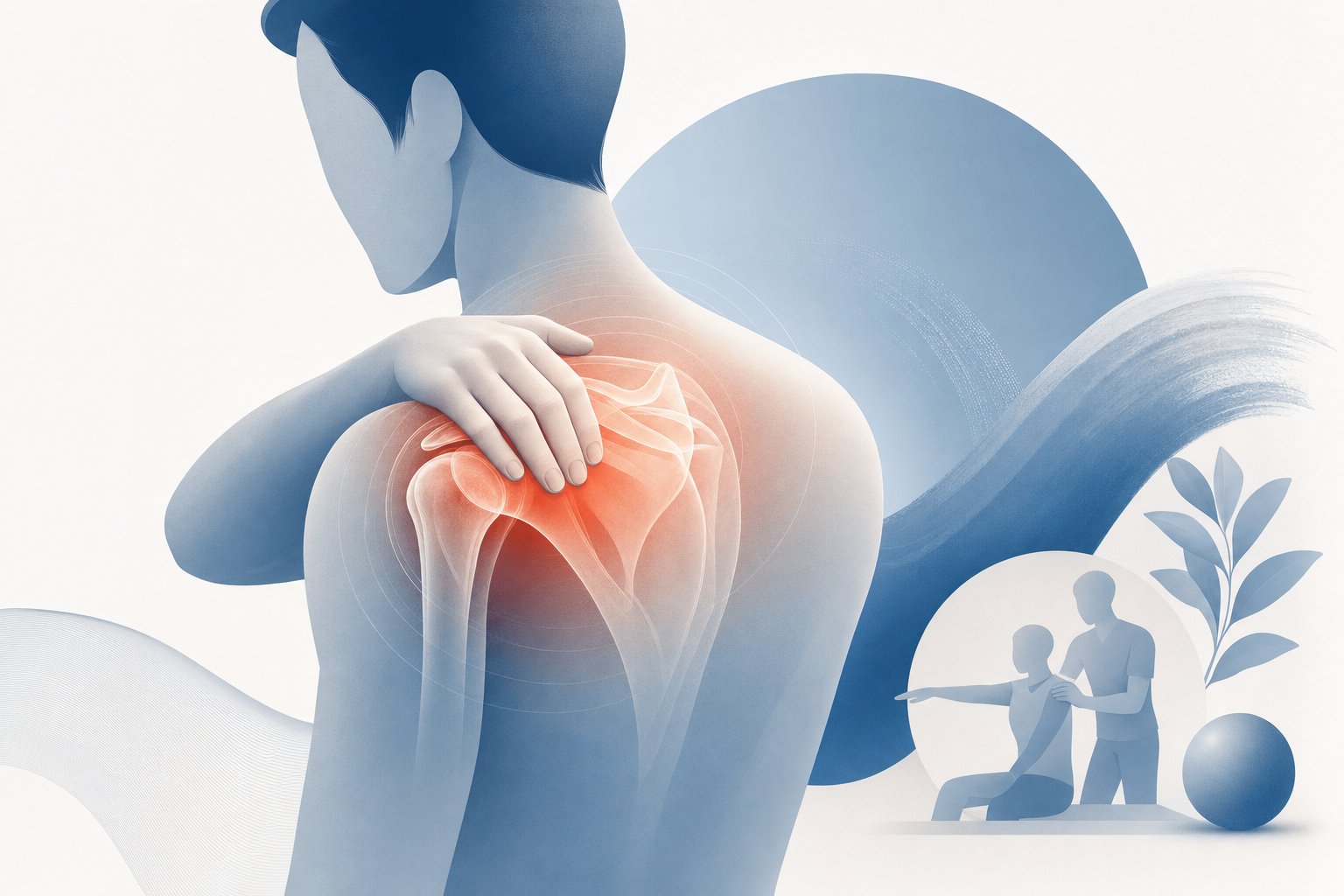
Reaching for a seatbelt, sleeping on your side, or lifting overhead suddenly becomes a problem. Shoulder pain has a way of disrupting the smallest daily tasks.
The shoulder is the most mobile joint in the body, which is exactly why it can be vulnerable. That freedom of movement relies heavily on the surrounding muscles, tendons, and ligaments working together. When one part is overloaded or irritated, pain often follows.
Common sources of shoulder pain include the rotator cuff tendons, the joint itself, and the structures around it. Problems can develop gradually from repetitive overhead activity, or suddenly from a fall, lift, or awkward movement.
Because so many structures work together, pinpointing the cause matters. A proper assessment identifies what is actually driving your pain, which is the key to treating it effectively rather than guessing.
Rotator cuff problems are among the most frequent, ranging from irritation and tendon strain to tears. These often cause pain with reaching, lifting, or lying on the shoulder. Strength and control usually respond well to targeted exercise.
Frozen shoulder is another common issue, where the joint becomes progressively stiff and painful. It can be frustrating because it develops slowly and takes time to resolve, but physiotherapy helps maintain movement and manage symptoms through each stage.
Other causes include shoulder impingement, bursitis, and joint irritation. Pain can also refer from the neck, which is why a good assessment checks the whole region rather than just the sore spot.
Treatment begins with understanding your shoulder and what makes it worse and better. From there we combine hands-on techniques to ease pain and stiffness with a progressive exercise program to rebuild strength and control.
Exercise is the cornerstone of shoulder recovery. Restoring the strength and coordination of the rotator cuff and surrounding muscles takes the load off irritated structures and allows them to settle. We progress this carefully so you get stronger without flaring up.
We also address the habits and activities feeding the problem, whether that is your sport, your work, or how you sleep. Practical adjustments alongside your rehab help you recover and stay pain free.
While your shoulder settles, keep it moving within comfortable limits. Avoiding all movement leads to stiffness and can slow recovery, so gentle activity is important even when it is a little sore.
Sleep can be a real challenge with shoulder pain. Lying on the painful side often aggravates it, so try sleeping on your back or the other side, using a pillow to support the arm. Small changes here can improve both your sleep and your recovery.
Avoid pushing through sharp pain or repeatedly aggravating the shoulder, but do not wrap it in cotton wool either. Finding the balance between rest and activity, guided by your physio, gives the best results.
Lying on the shoulder compresses irritated tendons and the joint, and there are fewer distractions at night so pain feels sharper. Sleeping on your back or the other side with a supportive pillow often helps.
Usually not. Complete rest can lead to stiffness and weakness. Gentle movement within comfort, guided by a physiotherapist, tends to help the shoulder recover faster.
It depends on the cause. Minor strains may settle in a few weeks, while conditions like frozen shoulder or significant rotator cuff issues can take longer. A physio can give you a clearer timeframe after assessing you.
Coordinated shoulder physiotherapy with access to sports medicine and orthopaedic care.
Hands-on and exercise-based physiotherapy for a wide range of musculoskeletal injuries and conditions.
Structured rehabilitation to help you recover safely and confidently after orthopaedic surgery.