Assessment and rehabilitation for ankle and foot pain, including sprains and overuse injuries.
Book an Appointment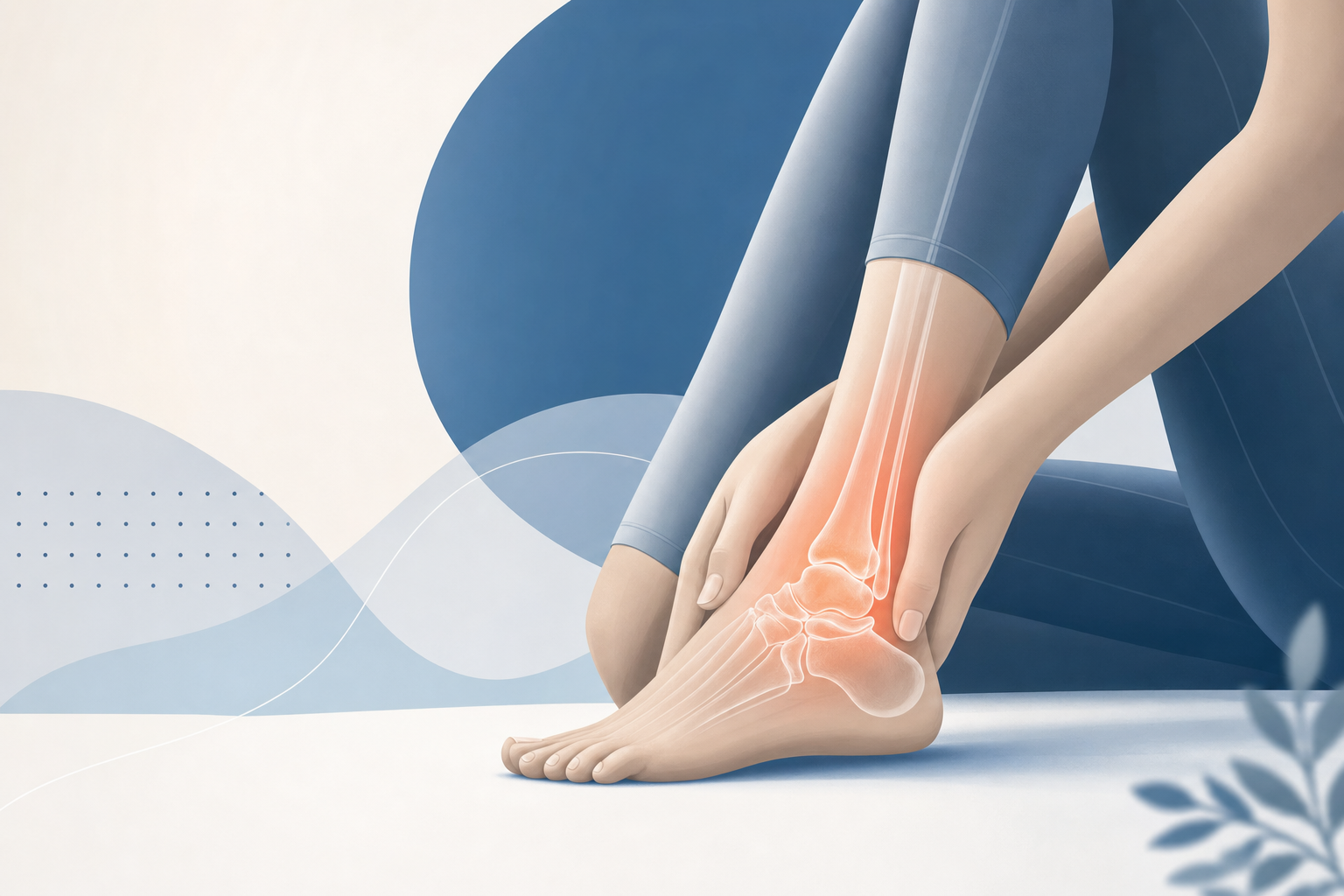
Ankle and foot pain affects people of all ages and can arise from injury, overuse, ageing and genetic factors. Often the pain comes from changes in the joint lining such as arthritis, or from ligament tears following injury like an ankle sprain. Occasionally it stems from conditions such as gout and, rarely, infection.
When you come in for assessment we look for signs that guide your care, including redness and warmth, weakness or instability, popping or crunching, locking, difficulty bearing weight, swelling, or the ankle giving way. From there we build a management plan tailored to you. This very often includes a home exercise program designed to improve strength, balance and flexibility, which is key to both recovery and preventing future sprains.
If your examination indicates a more significant problem, you may need to see an orthopaedic surgeon. We have two ankle and foot specialists available for consultation in our centre and can arrange an MRI if required. As a patient of the clinic we can often fast track your access to specialist care, and if imaging shows a significant issue, specialist review will usually be recommended.
We assess your ankle or foot, checking movement, strength, balance and stability. You receive a management plan, commonly including exercises for strength, balance and flexibility. If needed, we arrange prompt specialist review or imaging.
People with ankle and foot pain from sprains, overuse, arthritis or injury, including those with recurrent ankle instability.
It varies with severity. A structured rehab program focused on strength and balance helps you recover well and reduces the chance of re injury. We give you a realistic timeframe at assessment.
Yes. We have two ankle and foot specialists available for consultation in our centre and can fast track access if your assessment suggests it is needed.
Balance training restores the stability that is often lost after an ankle injury, which is important for preventing repeated sprains.
Hands on and exercise based physiotherapy for a wide range of musculoskeletal and orthopaedic problems.
Structured rehabilitation to help you recover safely and confidently after orthopaedic surgery.
Casting, boots and bracing to support and protect injuries during healing.