A cast does more than hold a broken bone still. When applied correctly it protects healing tissue, controls pain and sets the stage for a full recovery.
Cast application is the process of moulding a rigid support around an injured limb to keep bones and soft tissue in the correct position while they heal. It is commonly used for fractures, but also for certain severe sprains and after some surgical procedures.
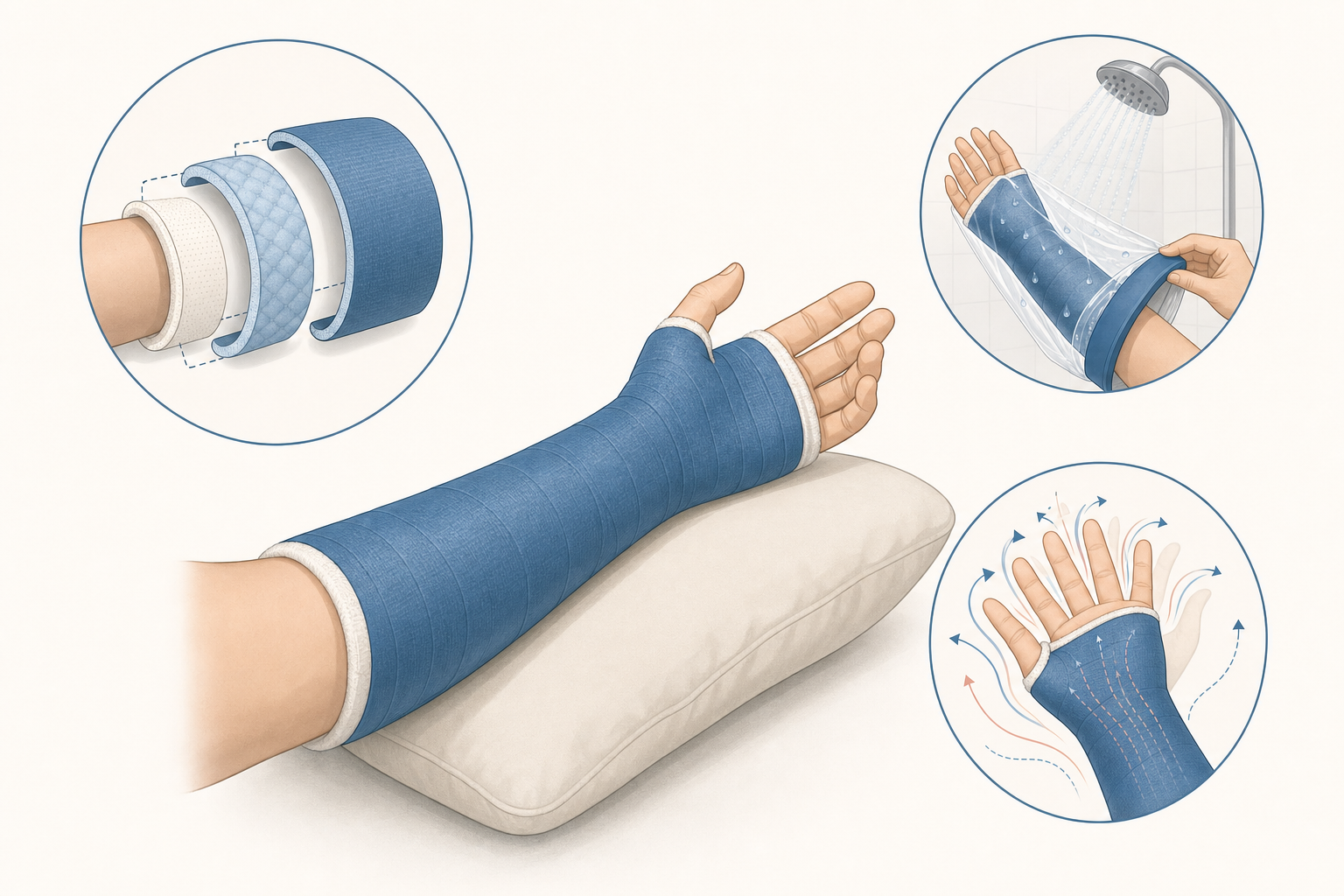
The process starts with a soft protective layer against the skin, followed by padding to cushion bony areas and prevent pressure points. The casting material, usually fibreglass or plaster, is then applied and moulded to the exact shape of your limb before it sets firm.
Getting this right takes skill. The cast must be snug enough to hold position but not so tight that it restricts circulation. A well-applied cast supports the injury while keeping you as comfortable and mobile as possible.
Not every injury needs a cast. It is generally used when a bone or joint must be held completely still to heal, such as with certain wrist, ankle or forearm fractures. In other cases a removable boot or brace may be more suitable, and we will advise which option fits your situation.
The decision is usually guided by imaging and, where relevant, your doctor or surgeon. A cast offers firm, continuous protection, which is ideal for injuries that could shift or reinjure with movement.
At Orthosports Physiotherapy in Concord, we apply and manage casts as part of your broader care, so the transition from immobilisation to rehabilitation is smooth and well coordinated.
Keeping your cast dry is essential. A wet cast can soften, lose its shape and irritate the skin underneath. Cover it well when showering, and use a waterproof sleeve if you have one.
Elevate the limb when you can, especially in the first few days, to reduce swelling. Never poke objects down the cast to scratch an itch, as this can break the skin and cause infection. Wiggle your fingers or toes regularly to keep circulation flowing.
Watch for warning signs. Increasing pain, numbness, tingling, colour changes in your fingers or toes, or a cast that suddenly feels too tight all warrant a prompt call. These can signal swelling or circulation problems that need attention.
When the cast is removed, do not be surprised if the limb looks thinner and feels stiff and weak. This is completely normal. The muscles have had a rest and the joint has been held still, so both need time to recover.
This is where physiotherapy makes a real difference. Gentle mobility work restores movement, and progressive strengthening rebuilds the muscle you lost. Starting rehab soon after the cast comes off shortens the road back to normal function.
We guide you through this stage so you regain confidence in the limb safely. With the right rehabilitation, most people return to their usual activities without lingering stiffness or weakness.
It depends on the injury, but most fractures need around four to six weeks of immobilisation. Your treating doctor will confirm the timeframe based on your imaging and how the bone is healing.
Dry the outside as best you can and contact us. A slightly damp surface may be fine, but a soaked cast can lose its strength and irritate the skin, and may need replacing.
It is best to avoid driving while a cast limits your ability to control the vehicle safely. Check with your doctor and insurer, as driving with an impairment can affect your cover.
Casting, boots and bracing to support and protect injuries during healing.
Hands on and exercise based physiotherapy for a wide range of musculoskeletal and orthopaedic problems.
Structured rehabilitation to help you recover safely and confidently after orthopaedic surgery.