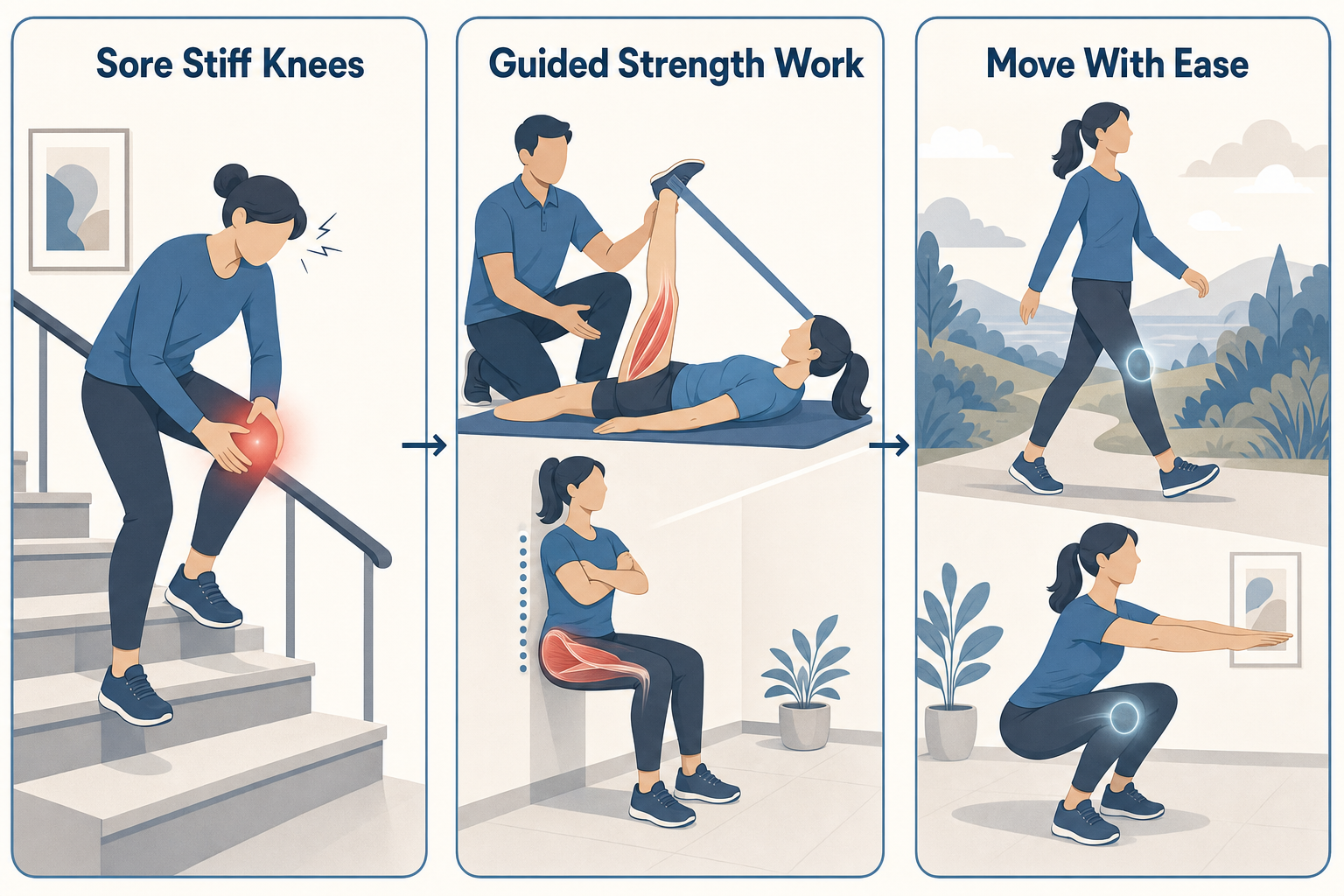
Knee pain can turn simple things like stairs, squatting or a morning walk into a challenge. The right exercises can make a real difference, and they're often simpler than you'd expect.
It might seem counterintuitive to exercise a sore knee, but strengthening the surrounding muscles is one of the most reliable ways to reduce pain. Strong muscles absorb load and support the joint, taking pressure off the structures that are hurting.
Many knee problems, from patellofemoral pain to early osteoarthritis, respond well to a targeted exercise program. The quadriceps at the front of the thigh and the muscles around the hip play a big role in how forces travel through the knee. When these are weak, the knee tends to cop more strain.
Exercise also keeps the joint moving and nourished. Cartilage relies on movement to stay healthy, so gentle, regular activity often helps more than resting up and avoiding the knee altogether.
A few foundational exercises suit most people with mild knee pain. Straight leg raises, done lying down, strengthen the quads without loading the knee much. Wall sits and sit-to-stands from a chair build strength through a fuller range as you progress.
Don't overlook the hips. Exercises like bridges and side-lying leg lifts target the glutes, which help control how your knee tracks during movement. Weak hips are a common and overlooked contributor to knee pain.
Start gently and build up gradually. A little discomfort during exercise is usually fine, but sharp or worsening pain is a sign to ease off. Aim for consistency over intensity, as regular effort brings the best results.
General exercises help many people, but knee pain has many causes, and the wrong program can sometimes irritate things. If your pain is persistent, severe, or came from an injury like a twist or a fall, it's worth getting assessed.
A physio can pinpoint exactly what's driving your knee pain and design a program that matches your goals, whether that's returning to running, getting up and down stairs comfortably, or simply moving without that nagging ache.
They'll also progress your exercises safely over time, which is where lasting improvement comes from. Watch out for swelling, locking, giving way or an inability to bear weight, as these warrant prompt review.
For most people, exercising every day or every second day works well early on. Your physio can tailor the frequency and load to your specific situation for the best results.
Complete rest usually isn't the answer. Gentle, appropriate exercise typically helps more than avoiding activity, though the right balance depends on the cause of your pain.
Physiotherapy for knee pain from injury, overuse, arthritis and ageing.
Hands on and exercise based physiotherapy for a wide range of musculoskeletal and orthopaedic problems.
Structured rehabilitation to help you recover safely and confidently after orthopaedic surgery.