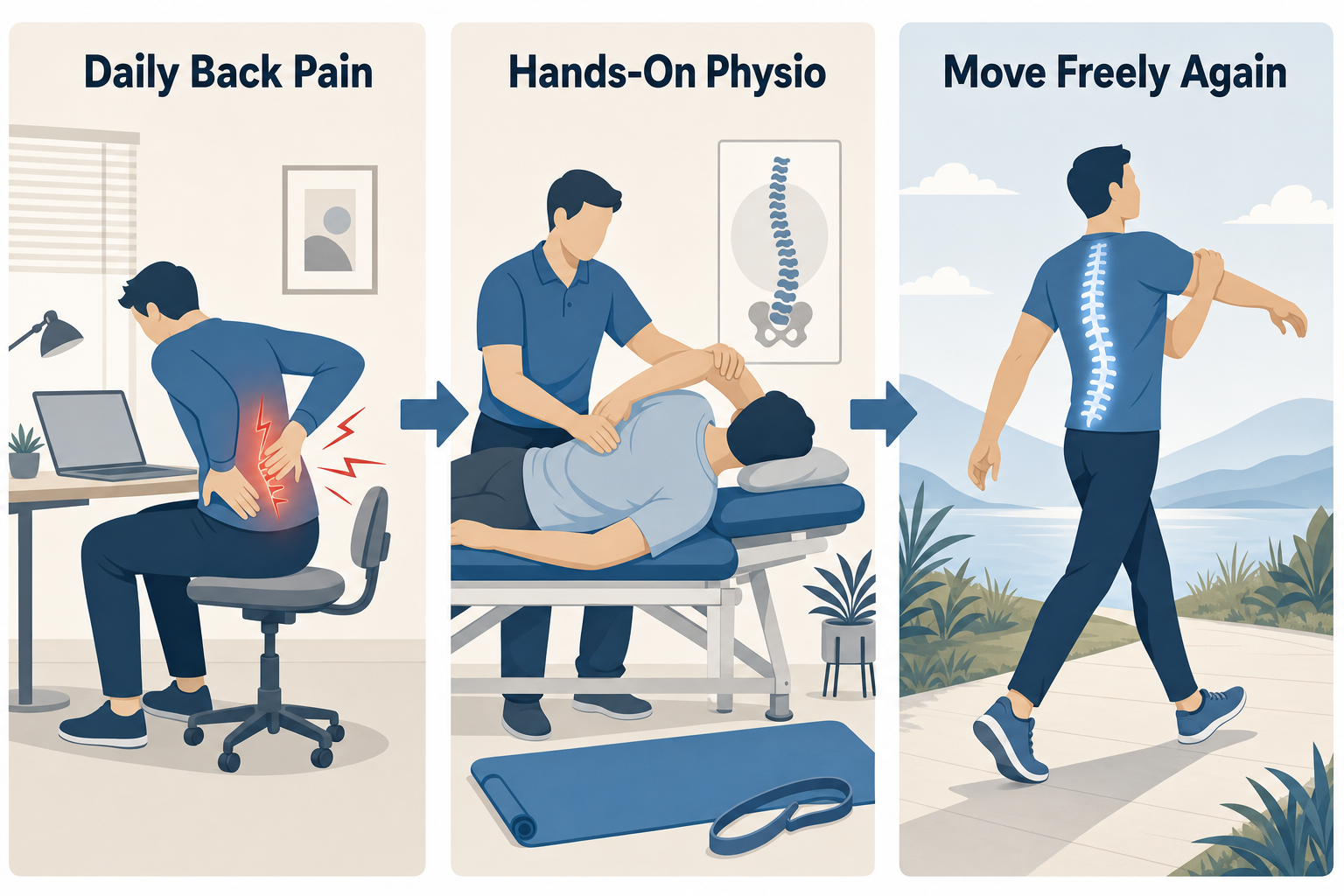
That deep ache in your lower back can make everything harder, from getting out of bed to sitting at your desk. The good news is that most back pain improves with the right approach.
Lower back pain is one of the most common reasons people book in to see a physiotherapist. It can come on suddenly after lifting something awkwardly, or build slowly over weeks of long hours at a desk. The pain might sit in one spot, spread across the lower back, or travel into the buttock or leg.
The reassuring part is that serious causes are rare. Most back pain comes from muscles, joints and discs that have become irritated or deconditioned rather than any lasting damage. Understanding this matters, because fear of movement often keeps people stuck longer than the injury itself.
A physio for lower back pain will ask about how it started, what makes it worse or better, and how it affects your daily life. This picture helps rule out anything that needs further investigation and points to the most useful treatment.
Treatment usually starts with settling your symptoms so you can move more comfortably. That might include hands-on techniques, gentle movements to reduce stiffness, and clear advice on positions and activities that ease the load on your back.
The bigger goal is getting you active again. Research consistently shows that staying moving, rather than resting in bed, speeds up recovery. Your physio will guide you through this at a pace that feels manageable, gradually rebuilding strength and confidence.
Exercise is the core of lasting improvement. A tailored program targeting your core, hips and back helps support your spine and reduces the chance of the pain returning. Your physio will progress these exercises as you improve, so you keep building rather than plateauing.
Between appointments, small habits make a big difference. Try to change positions often if you sit a lot, and take short walking breaks through the day. Movement keeps the area from stiffening up.
When lifting, keep the object close, bend at the hips and knees, and avoid twisting under load. These simple adjustments protect your back during everyday tasks like carrying shopping or lifting kids.
Stick with the exercises your physio gives you, even on good days. Consistency is what builds resilience over time. If a flare-up happens, don't panic. Gentle movement and the strategies you have learned usually settle things within a few days.
Many episodes of lower back pain ease within a few weeks, though this varies. Staying active and following your physio's plan generally speeds things up compared to resting and waiting it out.
Most back pain does not need imaging, as scans often show changes that are normal and unrelated to your pain. Your physio can advise if a scan is genuinely necessary based on your symptoms.
Assessment and treatment for back pain caused by injury, posture or age related change.
Hands on and exercise based physiotherapy for a wide range of musculoskeletal and orthopaedic problems.
Structured rehabilitation to help you recover safely and confidently after orthopaedic surgery.