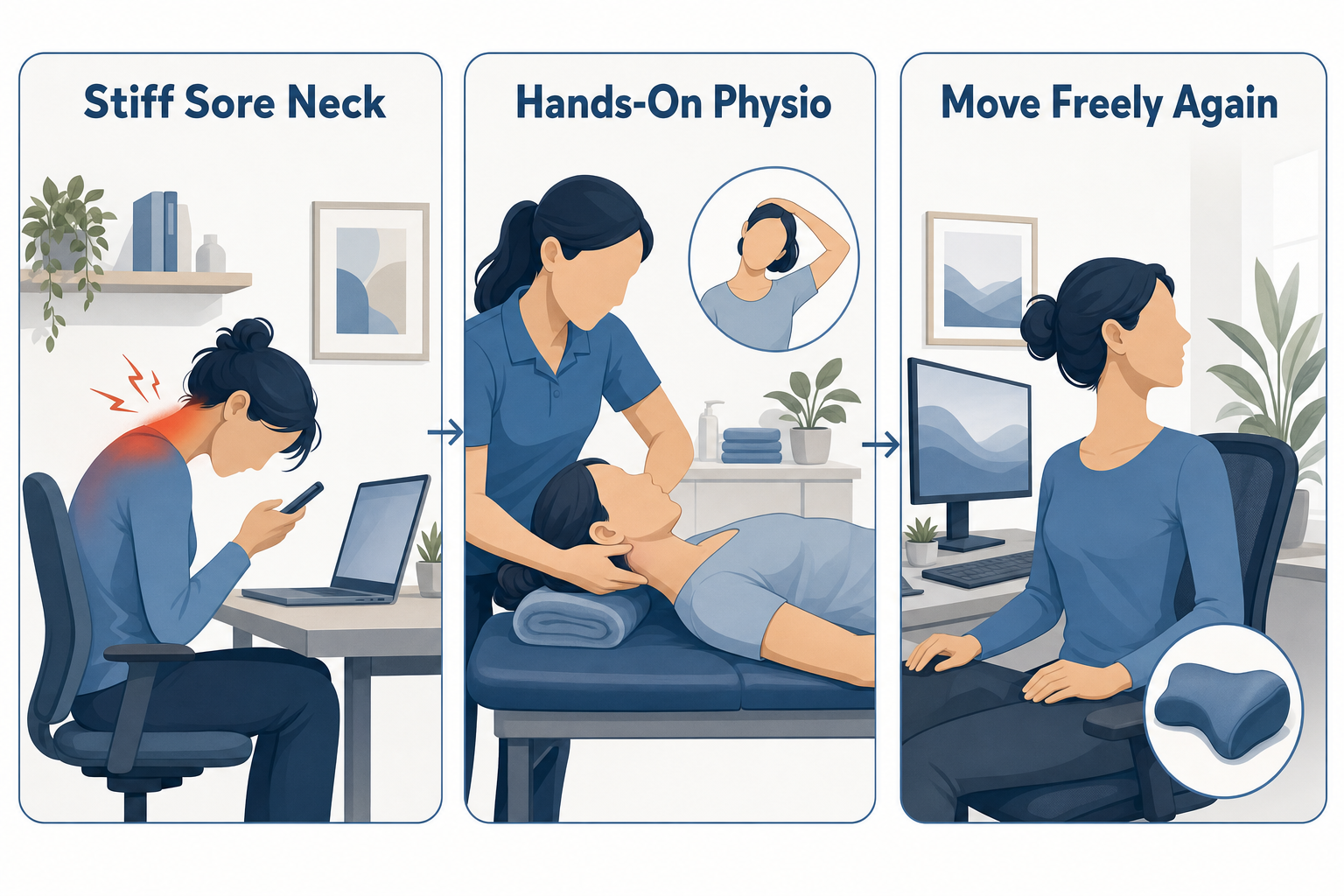
Waking up with a neck that won't turn, or feeling that familiar tension creep in after a long day at the screen, is frustratingly common. It doesn't have to be something you just put up with.
Neck pain often builds up from everyday habits rather than a single injury. Long hours hunched over a laptop or phone, sleeping in an awkward position, or holding tension in the shoulders can all leave the neck stiff and sore.
The muscles and joints of the neck are sensitive to posture and load. When they're held in one position for too long, they tire and tighten. This is why so many people notice their neck flaring up during busy or stressful periods.
Sometimes neck pain comes with headaches, or refers into the shoulder or arm. While this can feel alarming, it's usually a sign of irritated structures in the neck rather than anything sinister. A physio can assess it properly and put your mind at ease.
Physio for neck pain starts with working out what's driving your symptoms. Your physio will look at how your neck moves, your posture, and the strength and flexibility of the surrounding muscles.
Treatment often includes hands-on techniques to ease stiffness and reduce pain, giving you some quick relief. But the real key to lasting improvement is exercise. Gentle mobility work restores movement, while strengthening the deep neck and upper back muscles helps support your neck through the day.
Your physio will also look at the bigger picture, including your desk setup, screen habits and sleep position. Small changes here often prevent the pain from returning, which is just as important as settling the current episode.
Movement is your neck's friend. If you sit for work, get up and move regularly, and take a moment to gently roll your shoulders and turn your head through its range every hour or so.
Check your screen height. Your monitor should be roughly at eye level so you're not constantly looking down. When using your phone, try bringing it up towards your face rather than dropping your chin to it.
At night, a supportive pillow that keeps your neck in a neutral position can make a real difference. If you often wake with a stiff neck, it's worth reviewing your pillow. These simple adjustments, combined with your physio exercises, keep your neck feeling loose and comfortable.
Usually yes. Gentle movement within a comfortable range helps most neck pain settle faster than keeping it still. If a movement causes sharp or worsening pain, ease off and check with your physio.
Most neck pain is harmless. However, pain after a significant injury, or accompanied by arm weakness, numbness, dizziness or severe headaches, should be assessed promptly. A physio can advise if further review is needed.
Physiotherapy for neck pain caused by injury, posture or age related change.
Hands on and exercise based physiotherapy for a wide range of musculoskeletal and orthopaedic problems.
Structured rehabilitation to help you recover safely and confidently after orthopaedic surgery.