Reaching for a seatbelt or fastening a bra strap shouldn't make you wince. When shoulder pain starts interfering with everyday movements, it's a sign worth paying attention to.
The shoulder is the most mobile joint in the body, which also makes it prone to trouble. Many cases involve the rotator cuff, a group of muscles and tendons that stabilise the joint. These can become irritated, overloaded or torn, often after repetitive overhead activity or a sudden strain.
Other common culprits include frozen shoulder, where the joint gradually stiffens and becomes painful, and bursitis, an irritation of the fluid-filled sac that cushions the joint. Neck problems can also refer pain into the shoulder, which is why a proper assessment matters.
Because these conditions look similar from the outside but need different treatment, guessing the cause rarely helps. A physio can work out what's going on and tailor the approach accordingly.
Some shoulder niggles settle on their own within a few days. But there are clear signs that professional help will speed things up. If pain has lasted more than a week or two, is not improving, or is getting worse, it's time to see a physio.
Other red flags include pain that wakes you at night, difficulty lifting your arm or reaching overhead, weakness, or a shoulder that feels unstable. Pain following a fall or accident also deserves prompt assessment.
Acting early often means a shorter recovery. Conditions like frozen shoulder in particular respond better when treatment starts sooner rather than after months of avoiding movement.
Your physio will start by assessing how your shoulder moves, its strength, and which specific structures are involved. This guides a plan built around your particular problem rather than a generic routine.
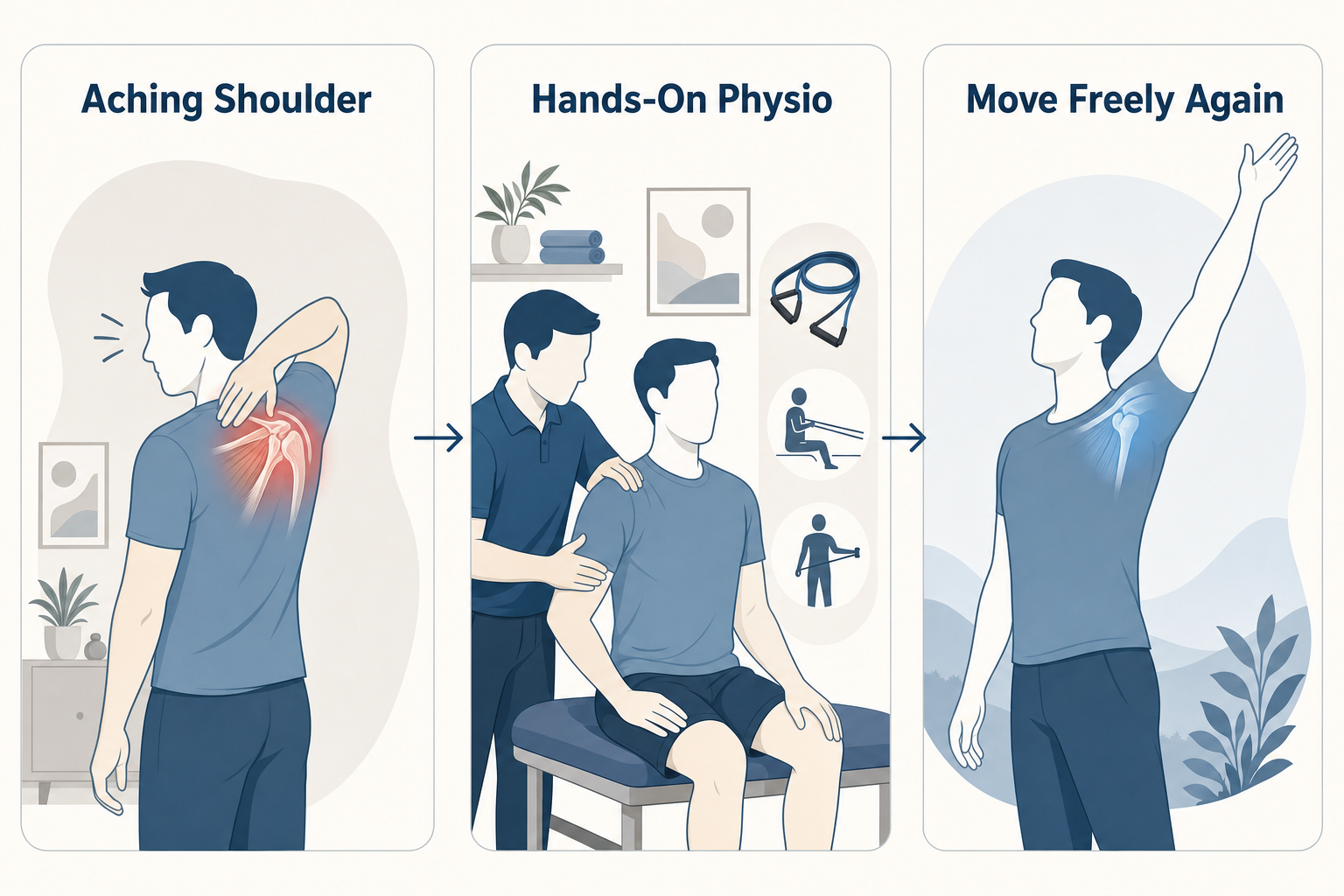
Treatment often combines hands-on techniques to ease pain and restore movement with a progressive exercise program. Strengthening the rotator cuff and the muscles around the shoulder blade is usually central, as good control here takes pressure off the joint.
Recovery timelines vary depending on the cause. A minor strain might settle in a few weeks, while a frozen shoulder can take longer. Your physio will keep you informed and adjust the plan as your shoulder improves.
Mild shoulder pain sometimes settles with rest and gentle movement. But if it lingers, limits your daily activities, or keeps returning, physio can address the underlying cause and prevent it becoming chronic.
It depends on the cause. Some movement is usually helpful, but pushing through sharp pain can make things worse. A physio can guide you on what's safe and how to modify your training.
Coordinated shoulder physiotherapy with access to sports medicine and orthopaedic care.
Hands on and exercise based physiotherapy for a wide range of musculoskeletal and orthopaedic problems.
Structured rehabilitation to help you recover safely and confidently after orthopaedic surgery.