Surgery is only half the journey. What you do in the weeks and months afterwards often shapes how well you recover and how quickly you get back to normal life.
An operation repairs or replaces something inside your body, but it can't restore the movement, strength and confidence you'll need afterwards. That's where post-operative physiotherapy comes in. It bridges the gap between surgery and getting back to the things you enjoy.
After procedures like knee replacements, shoulder repairs or ligament reconstructions, tissues need to heal in a controlled way. Move too little and you risk stiffness and weakness. Move too much too soon and you risk damaging the repair. Physio helps you find that balance.
Many surgeons consider rehab an essential part of the treatment, not an optional extra. A well-structured program gives your surgery the best chance of a strong, lasting result.
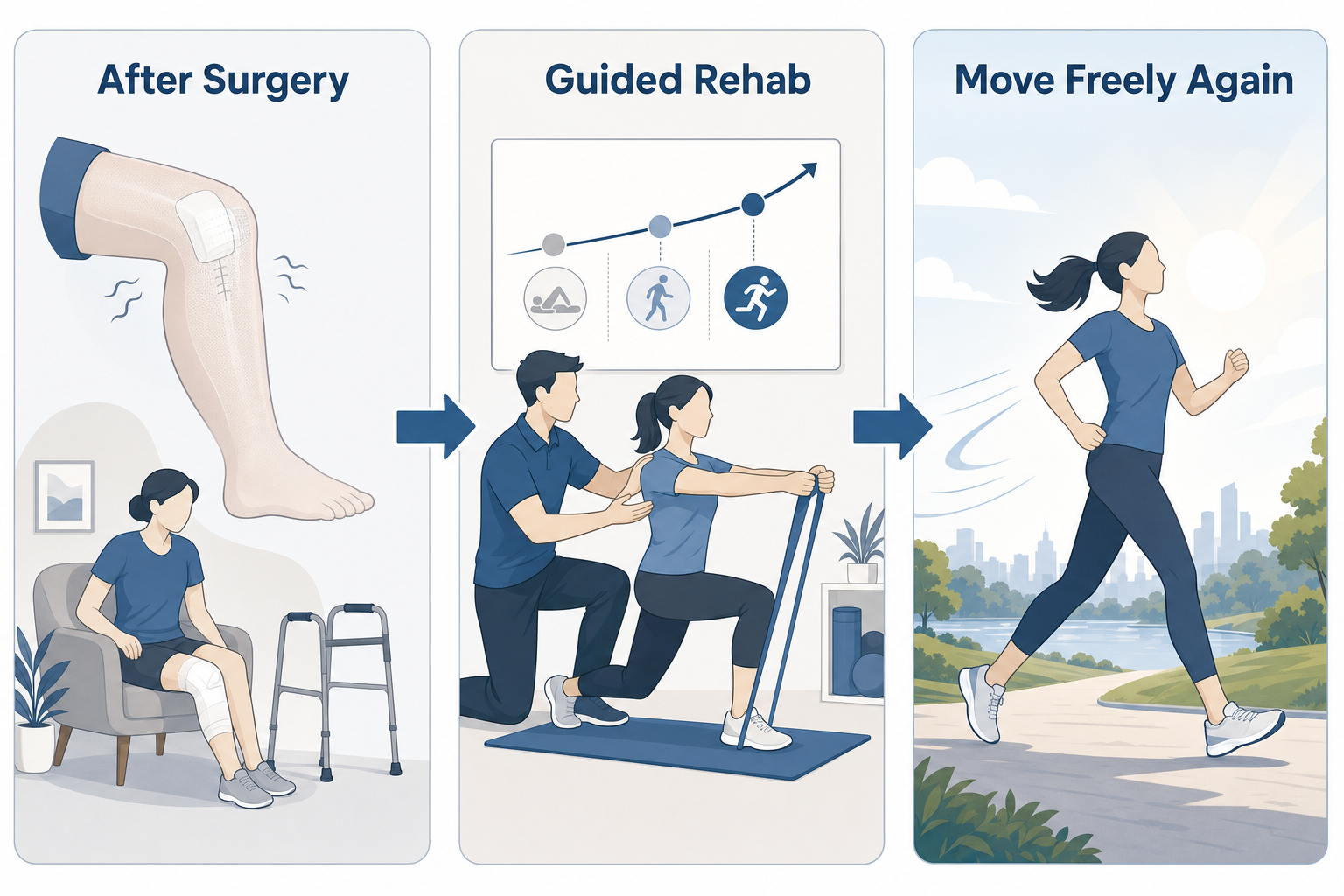
Post-op physio usually follows clear phases that respect your body's healing. In the early stage, the focus is on protecting the repair, managing swelling and pain, and gently restoring movement within safe limits set by your surgeon.
As healing progresses, the emphasis shifts to rebuilding range of motion and starting to load the area. Strength work gradually increases, always guided by how your body is responding rather than rushing to a fixed timeline.
The final stage is about returning to your normal activities, whether that's walking without a limp, getting back to sport, or managing physical work. Your physio progresses you through each phase, making sure you're ready before moving forward.
Consistency is everything after surgery. Doing your exercises as prescribed, even when progress feels slow, is what drives recovery. Small daily efforts add up to big gains over the weeks and months.
Communication helps too. Tell your physio about any unusual pain, swelling or setbacks so the plan can be adjusted. They work alongside your surgeon to keep your rehab on track and within safe boundaries.
Patience matters. Recovery from major surgery takes time, and comparing yourself to others rarely helps. Trust the process, follow your program, and celebrate the milestones as you reach them.
This varies by procedure. Some rehab begins within days, while other operations require a period of protection first. Your surgeon and physio will confirm the right timing for you.
It depends on the surgery and your goals. Some recoveries take a few weeks, others several months. Your physio will give you a realistic timeframe based on your specific situation.
Hands on and exercise based physiotherapy for a wide range of musculoskeletal and orthopaedic problems.
Structured rehabilitation to help you recover safely and confidently after orthopaedic surgery.
Casting, boots and bracing to support and protect injuries during healing.