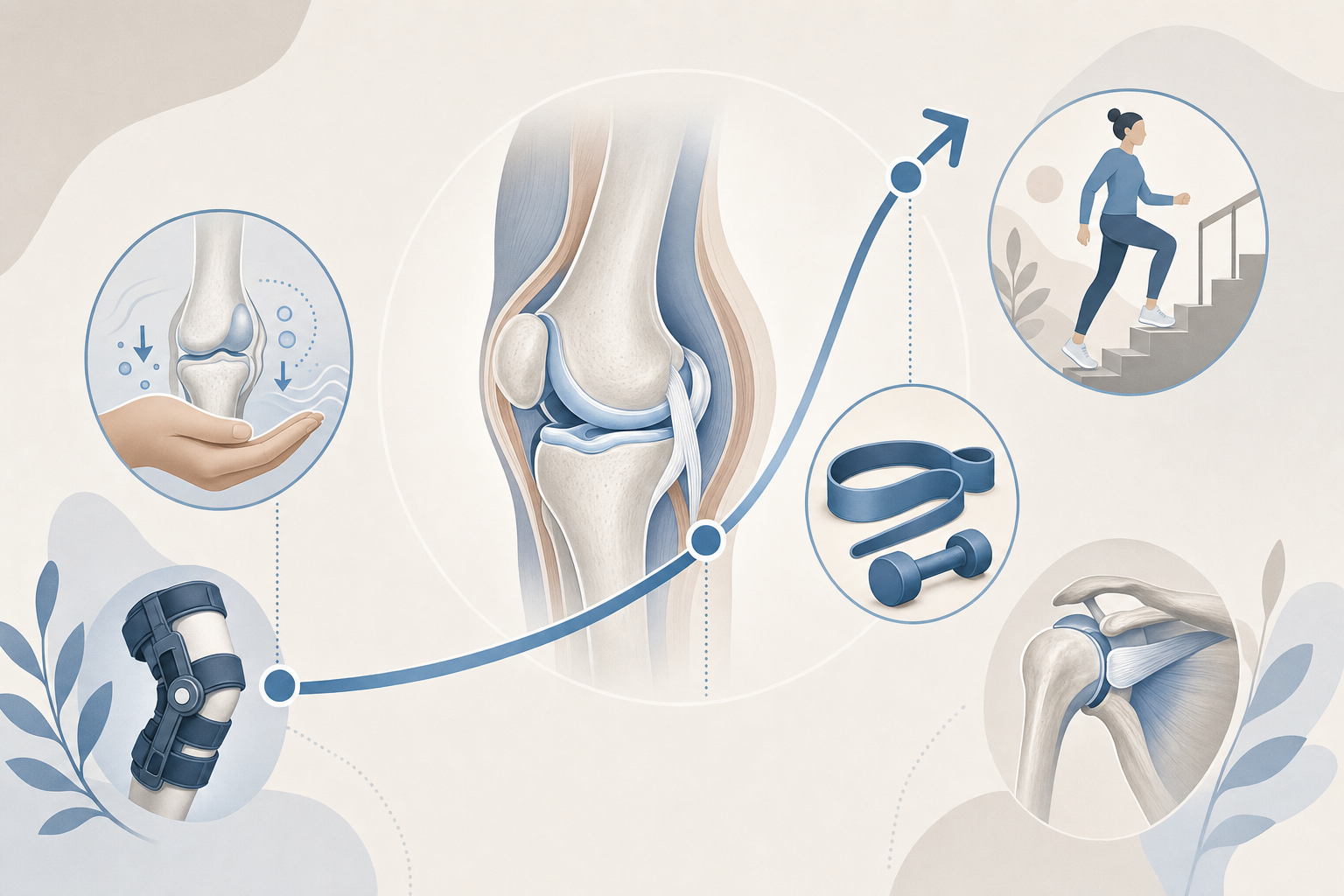
The operation went well, but now your joint feels stiff, weak and unfamiliar. What you do in the weeks after surgery often matters as much as the surgery itself.
Surgery repairs or replaces damaged structures, but it does not restore movement or strength on its own. After an operation the surrounding muscles weaken quickly, scar tissue forms and joints stiffen. Post operative physiotherapy addresses all of this so you get the best possible outcome from your procedure.
Without structured rehab, people often plateau well short of their potential. They may regain enough function to get by but never fully return to sport, work or the activities they love. Guided physiotherapy closes that gap.
Just as important, it keeps you safe. Doing too much too soon can jeopardise a repair, while doing too little leaves you stiff and deconditioned. A physiotherapist helps you walk that line.
Recovery follows predictable phases, and your program respects the healing timeline of the tissue involved. In the early stage the focus is on protecting the surgical site, managing swelling and pain, and restoring gentle movement.
As healing progresses we build range of motion and start light strengthening. This middle phase is where a lot of the groundwork happens, retraining muscles that have switched off and improving how the joint moves and loads.
The final phase is about return to function. Whether your goal is climbing stairs without thinking, lifting at work or getting back on the court, we progressively load the area and test it under real-world demands before you are discharged. Following your surgeon's protocol throughout keeps everyone on the same page.
We work with people recovering from a wide range of orthopaedic procedures, including knee reconstructions, joint replacements, rotator cuff repairs, ankle and foot surgery and spinal operations. Each has its own protocol and precautions, which we follow closely.
Many patients come to us straight after their surgeon appointment with a rehab protocol in hand. We interpret that plan, tailor it to your specific progress and adjust as you heal. If you are recovering faster or slower than expected, the program flexes with you.
We also handle practical needs such as fitting boots and braces, and adjusting casts where appropriate, so your protective equipment supports rather than hinders your recovery.
Consistency beats intensity. Doing your prescribed exercises little and often, as instructed, produces far better results than occasional heavy efforts. Recovery is a marathon, and steady progress adds up.
Communication helps too. Tell your physiotherapist about unusual pain, swelling or setbacks so the program can be adjusted. Rehab is rarely a perfectly straight line, and small tweaks keep you moving forward safely.
Finally, be patient with yourself. Tissue healing takes time no matter how motivated you are. Starting physiotherapy early, ideally soon after your operation, and sticking with it gives you the best chance of a full and lasting recovery.
Often within the first week or two, depending on your surgeon's advice. Early gentle movement helps reduce stiffness and swelling. Always follow the timeline your surgeon provides, and we will work within it.
You may feel some discomfort, especially early on when regaining movement, but sessions are carefully paced to stay within safe limits. Sharp or worsening pain is a signal to ease back, and we adjust accordingly.
It helps a great deal, as it tells us the precautions and milestones for your specific procedure. If you do not have it, we can usually request it or contact your surgeon to make sure your rehab is on track.
Hands on and exercise based physiotherapy for a wide range of musculoskeletal and orthopaedic problems.
Structured rehabilitation to help you recover safely and confidently after orthopaedic surgery.
Casting, boots and bracing to support and protect injuries during healing.